The Journey to the Perfect Cannoli: A Love Letter to Sicily’s Sweetest Icon
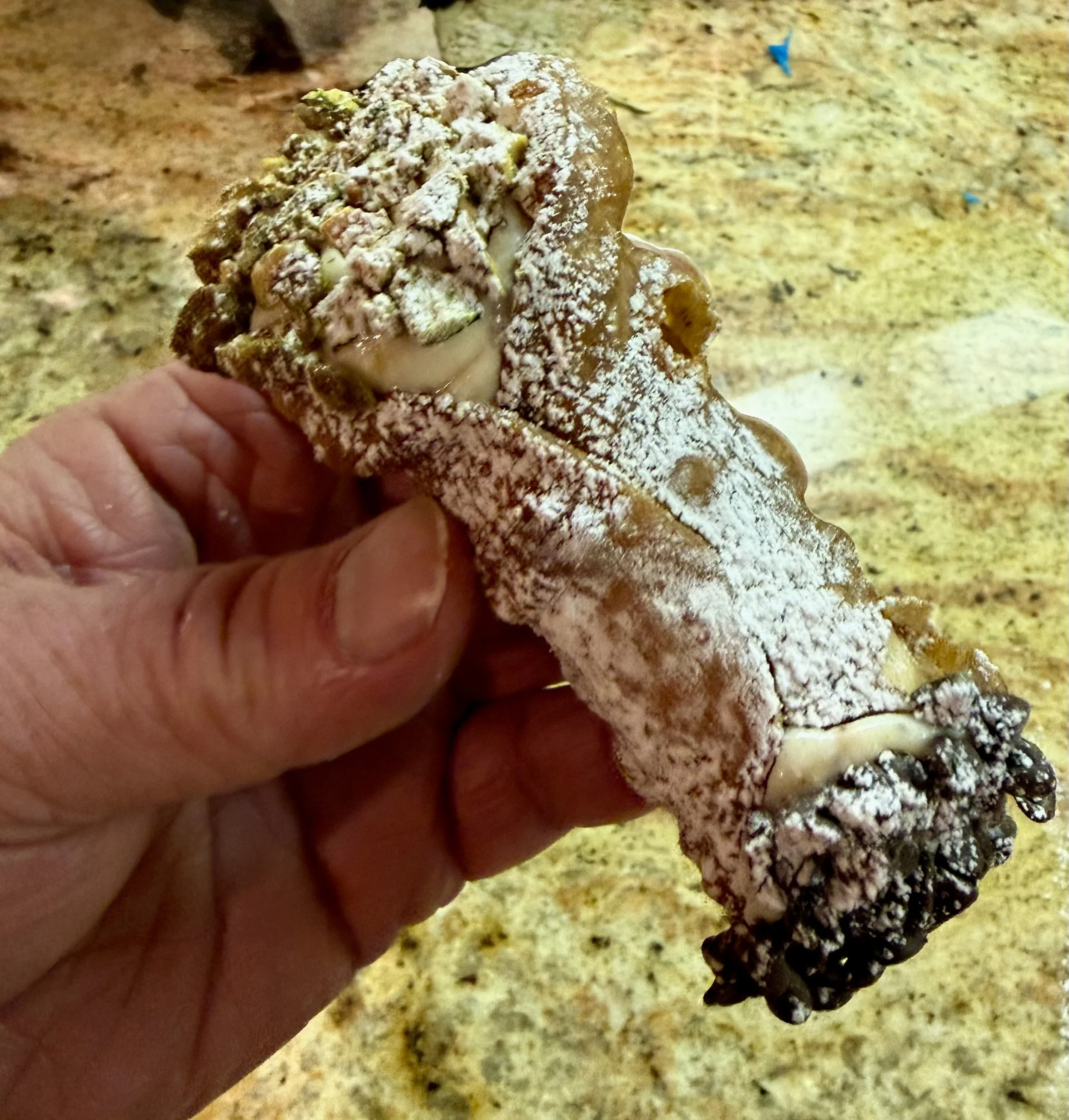
A bit of heaven. A perfectly balanced Cannolo!
Cannoli aren’t just a dessert—they’re a rite of passage for anyone passionate about Italian pastries. Their crisp, bubbly shells and luscious ricotta filling are iconic, but what truly makes a cannoli unforgettable is the journey behind each bite—one that’s deeply rooted in Sicilian tradition and personal obsession.
The Sweet History of Cannoli
Cannoli originated in Sicily, a region renowned for its vibrant food culture and sweet tooth. Legend has it these tube-shaped pastries were first crafted in Palermo during Carnival, symbolizing abundance and celebration. Over centuries, cannoli evolved from festive treats to year-round delights, with each Sicilian town adding its own twist. Today, Sicily is universally recognized as the home of the world’s best cannoli, thanks to its rich ricotta, fresh citrus, and deep respect for culinary craft.
Cannolo or Cannoli? Getting the Lingo Right
Let’s clear up a classic Italian lesson: “Cannolo” is singular, and “cannoli” is plural. So, if you’re in Sicily and want just one, you’d say, “Vorrei un cannolo, per favore!” (That’s “I’d like one cannolo, please!”) But let’s be honest—who can stop at just one?
Next time you’re at a bakery or traveling in Italy, you’ll sound like a local whether you’re ordering one (“un cannolo”) or a whole tray (“dei cannoli”). Bonus points for perfect pronunciation!
My Cannoli Obsession: From Luca’s Pastry to Sicilia.
My journey with cannoli began at 15, working my first bakery job at Lucas Pastry. I still remember filling each shell to order, dipping the ends in colored pine nuts or chocolate chips, and watching customers’ eyes light up. That’s also where I first encountered a stovetop-cooked ricotta filling, almost like a rice pudding—something I’ve never seen since, but still think about to this day.
Years and countless attempts at dough later, my travels through Italy, especially Sicily, have only deepened my appreciation. There’s nothing like strolling the streets of Agrigento, Ortigia, or joining a Sicilian passeggiata in Taormina and biting into a freshly filled cannolo, the filling perfectly balanced and not too sweet. Even convents serve their own legendary versions, each with its own character.
The Pursuit of Perfection
Getting the dough just right has been a decades-long mission. After our most recent trip to Sicily, I finally feel like I’ve cracked the code. The real magic? Filling the shells just before serving, keeping everything crisp and fresh. It’s a bit of an undertaking, but when you nail it, you’ll wow your friends—trust me.
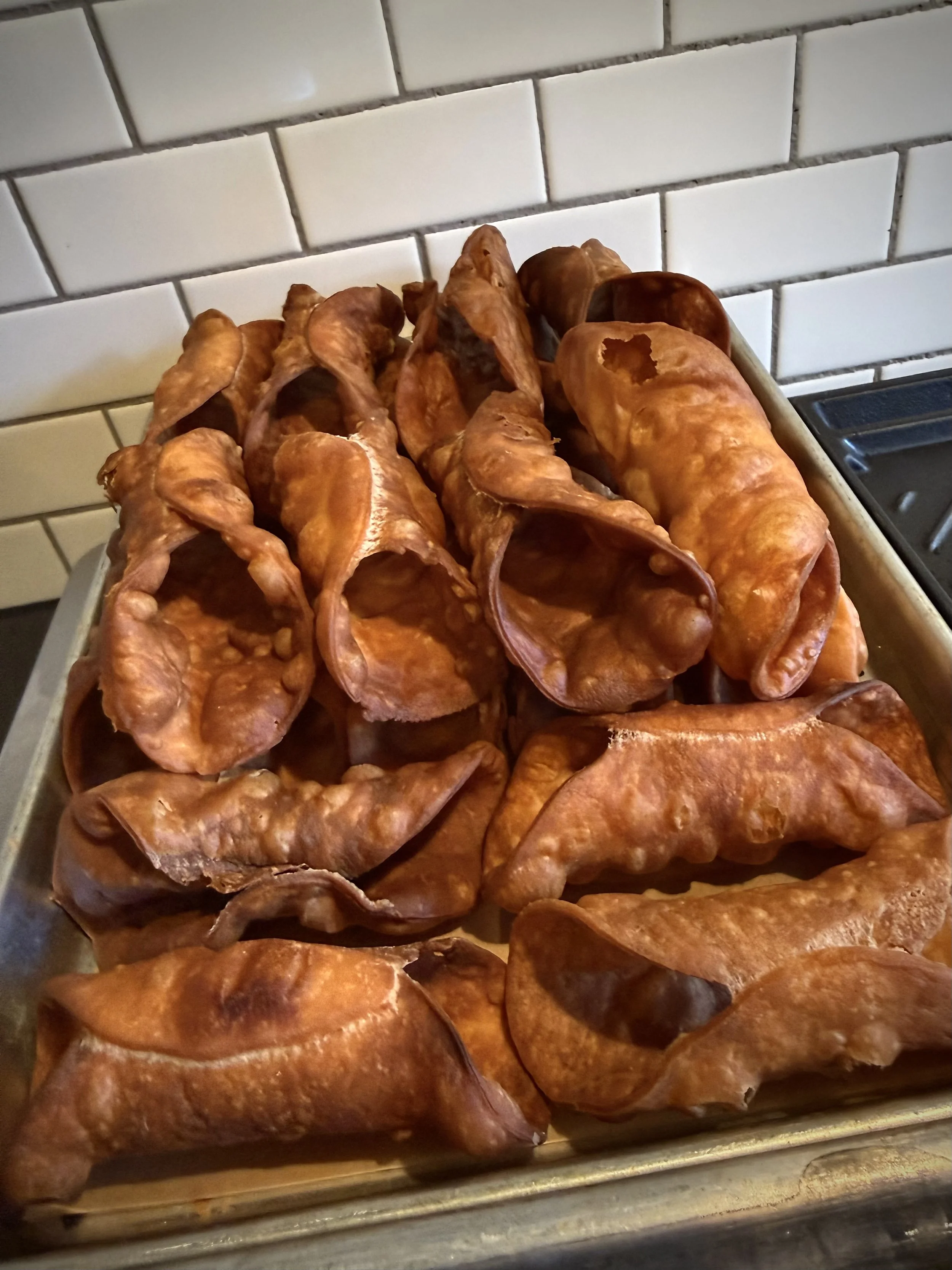
The perfect shell, thin, blistered and delicate.
A Recipe Worth the Effort
Making cannoli from scratch takes time and love, but the payoff is pure joy. My latest batch even passed the ultimate test: a birthday party full of Italians (including a Sicilian dad) who declared them as good as the real deal back home. That’s the kind of validation that makes every failed dough and ricotta experiment worth it.
So, I hope you’ll try this recipe, invest the time, and savor the process. With every bite, you’ll taste a little bit of Sicily—and a whole lot of joy.

Cannoli Shell Dough
Ingredients
-
7.4 oz Caputo 00 Red Flour
-
0.125 tsp Natural Cocoa Powder
-
0.5 oz Granulated Sugar
-
0.33 tsp Fine Sea Salt
-
0.5 oz Lard, Cold
-
0.5 oz Unsalted Butter, Melted & Warm
-
1.76 oz Marsala Wine
-
2 tsp White Wine Vinegar
-
0-1 tsp Water (only if absolutely necessary)
Instructions
- Dry Mix: Whisk flour, cocoa, sugar, and salt thoroughly in a large bowl.
- Fat Phase: Rub in cold lard with your fingers until the mixture resembles wet sand.
- Add melted butter and mix until evenly absorbed. Texture should be dry and cohesive when squeezed, not greasy.
- Liquids: Mix Marsala and vinegar together in a small bowl.
- Add the liquid mixture gradually to the flour mixture, stopping as soon as the dough comes together. Add water only if it will not bind. This hydration is intentionally tight - the dough should feel borderline dry before resting.
- Minimal Knead: Knead for 2-3 minutes maximum. The dough should look rough, not silky.
- Rest: Wrap the dough tightly in plastic wrap and rest for 45-60 minutes at room temperature.
- Rolling: Roll dough through pasta sheeter to setting 6. Optional but recommended: roll to setting 3, make a single book fold, then continue rolling to setting 6.
- Rest the sheets for 5-10 minutes before cutting.
- Cut ovals sized to give 15g dough each (approximately 18 shells from this batch).
- Forming: Wrap dough snug (not loose, not stretched) around lightly oiled cannoli forms. Seal the edge with water only.
- Rest the formed shells for 30-60 seconds before frying.
- Frying: Heat oil to 360°F / 182°C. Fry shells seam-side down first.
- Remove forms while shells are still warm, then cool completely before filling.
Notes
• Prep time breakdown: 20 minutes for mixing, 40 minutes for rolling and forming.
• Equipment: Cannoli tubes | Cannoli cutter - If you're serious about cannoli and plan to make a bunch, the investment in this cutter is ideal.
• This hydration is intentionally tight. Do not add extra liquid unless the dough absolutely will not come together.
• The dough should feel borderline dry before resting - this is correct.
• Do not over-knead. 2-3 minutes maximum. The dough should look rough, not smooth or silky.
• Each shell uses approximately 15g of dough for optimal size and crispness.
• Do not wrap the dough too loose or too tight on the forms - snug is key.
• Remove the metal forms while the shells are still warm to prevent sticking.
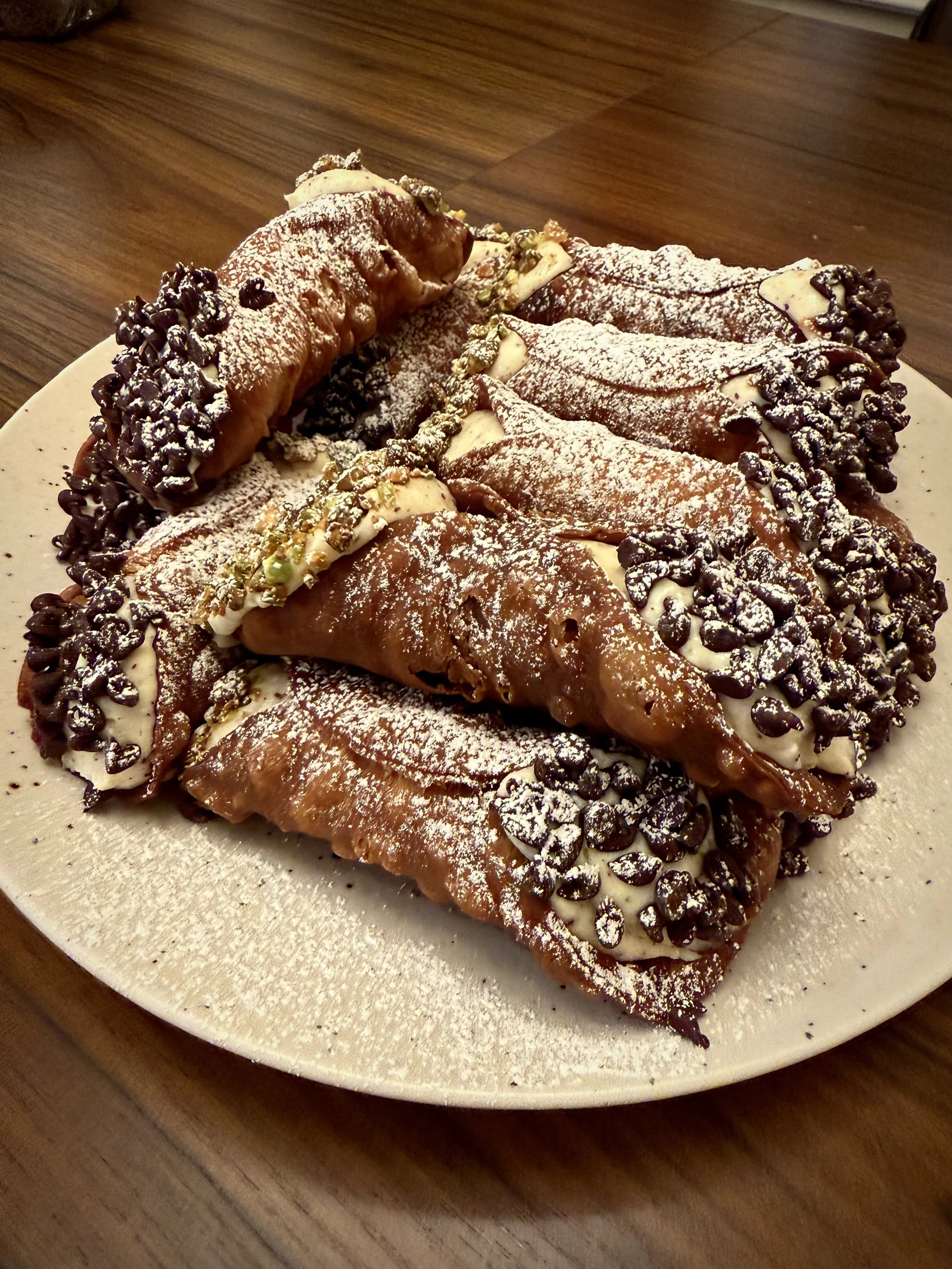
A platter full of freshly filled cannoli. It doesn’t get much better than this!!!!
Cannoli Filling (Sicilian-Style)
Ingredients
-
28 oz Bellwether Farms Whole Jersey Milk Ricotta (unstrained)
-
2.82 oz Confectioners' Sugar
-
1 oz Dark Chocolate, finely grated
-
1.5 tsp Vanilla Extract
-
0.5 tsp Ground Cinnamon
-
0.125 tsp Fine Salt
-
0.16 oz Xanthan Gum (Thicken Up), optional
Instructions
- Smooth the Ricotta: Place ricotta in a mixer fitted with a paddle (or use a spatula). Mix on low speed just until smooth and cohesive. Do not aerate.
- Add Sugar: Add confectioners' sugar and mix on low until fully incorporated and glossy.
- Incorporate Stabilizer (if using): Sprinkle xanthan gum gradually while mixing on low. Mix 30-45 seconds until fully hydrated and no graininess remains.
- Add Flavorings: Add vanilla, cinnamon, and salt. Mix briefly to combine.
- Fold in Chocolate: Add grated chocolate last. Fold gently by hand or mix on the lowest speed until evenly distributed.
- Rest the Filling: Cover and refrigerate 30-60 minutes before piping. Texture will tighten slightly and become pipe-perfect.
Notes
• Cinnamon Note: This recipe uses ground cinnamon powder rather than cinnamon oil. Most Italian-American bakeries in the USA use cinnamon oil, but I find it too strong and it overpowers the delicate flavor of a high-quality ricotta. If you think about Sicily and its history of spice trading, they would have had excellent access to high-quality cinnamon powder. You can substitute cinnamon oil if preferred, but use sparingly.
• Xanthan gum helps achieve proper texture that compensates for not having access to authentic Sicilian ricotta. Just using a little science, not blasphemy.
• This recipe is formulated specifically for Bellwether Farms Whole Jersey Milk Ricotta, which has higher moisture content than traditional Sicilian ricotta.
• Because the ricotta is not strained, xanthan gum stabilizes the filling, prevents moisture release, and achieves service-stable texture.
• Desired texture: smooth and cohesive, holds a clean peak, pipes easily without tearing shells, no weeping during service.
• Traditional Sicilian Option: If using sheep's milk or goat's milk ricotta (as used in Palermo/Agrigento), reduce or omit xanthan gum entirely. These ricotte are naturally firmer and drier.
• Best filled same day for optimal shell crispness.
• Filling holds 24-36 hours refrigerated without weeping.
• Pipe gently; avoid overfilling to preserve shell structure.
• Target fill: 65-70g per cannolo.
Watch our video for step-by-step guidance, and let me know how your cannoli adventure turns out!